 |
 |
 |
 |
 |
CNSM 2026 Distinguished Expert Panel
Do Networks Really Need Agents? Rethinking Intelligence in Network Management
Agentic AI is rapidly emerging as the next paradigm for network and service management. Agents promise to reason over complex network state, use tools, coordinate decisions, and ultimately move operations from automation toward autonomy. But do networks really need agents?
Many network management problems already have mature solutions based on deterministic automation, optimization, control theory, machine learning, and programmable infrastructures. Adding autonomous agents may increase flexibility and adaptability, but also introduces non-determinism, new failure modes, coordination problems, computational overhead, and difficult questions of trust and accountability.
This panel challenges the assumption that more intelligence necessarily leads to better network management. Where do AI agents provide capabilities that conventional automation cannot? Which decisions should remain deterministic? Can agents safely operate in real-time control loops? What happens when multiple agents pursue conflicting objectives? And as networks become increasingly autonomous and critical to AI-enabled services, who ultimately remains responsible for their decisions?
Bringing together perspectives from AI-native networking, network programmability, real-time systems, operations, and policy, the panel will debate where agentic intelligence genuinely adds value, and where simpler, bounded approaches may still be the smarter choice.
Panelists
 Andra Lutu is a Principal Researcher at Telefónica, where she leads a team of researchers focused on applied research on AI for Networks and Networked Systems. With over a decade of post-PhD experience in mobile network architecture, her work focuses on making networks AI-native, from network digital twins and AI-driven radio coverage optimization to distributed data plane operations, as a path toward autonomous network operations. The team contributes to several European research projects, including SNS-JU ORIGAMI as project coordinator and SNS-JU PIONEERS-6G as technical coordinator. Her research has been published at top venues including ACM SIGCOMM, ACM MobiCom, and IEEE INFOCOM.
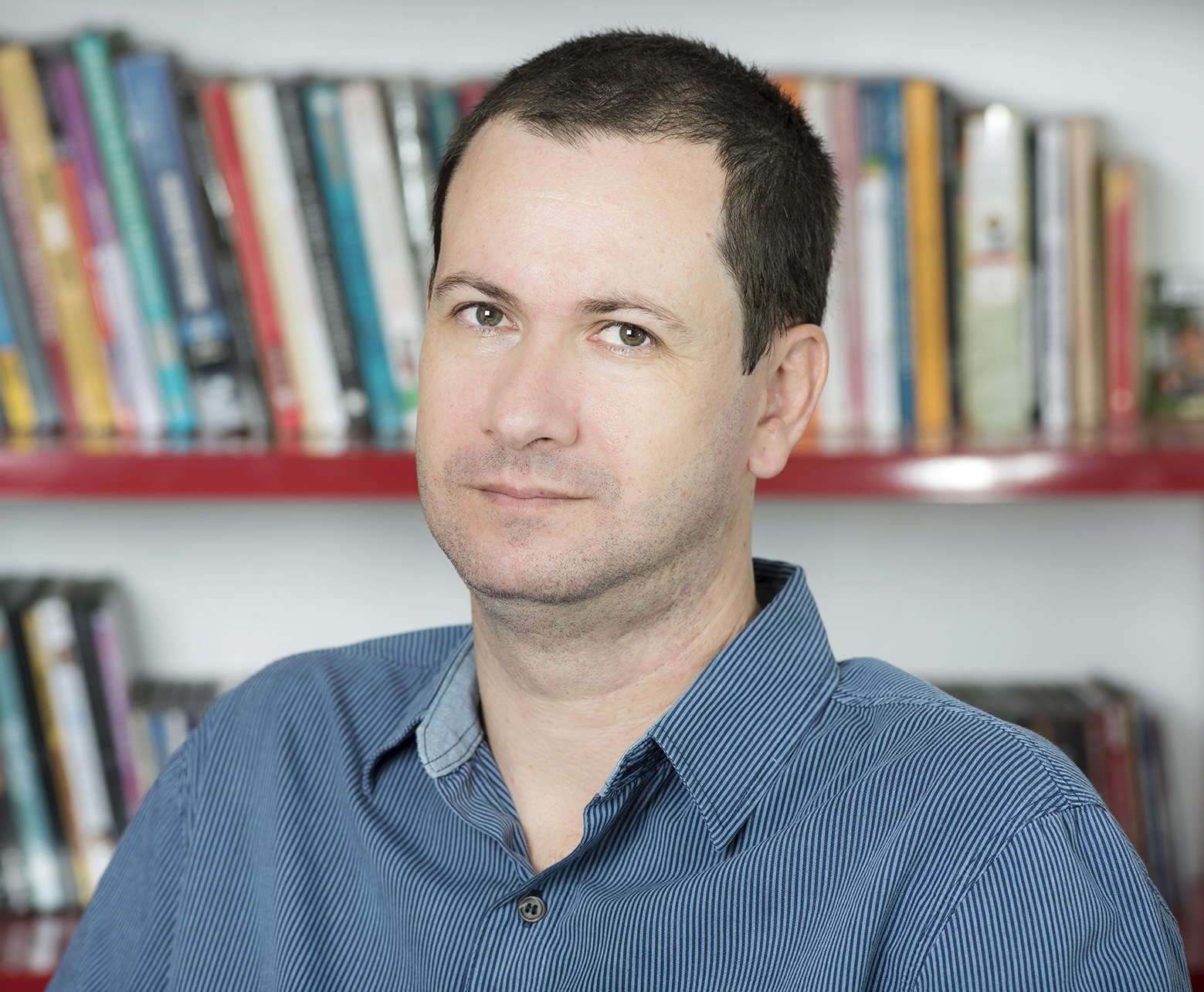 Fábio Luciano Verdi is a Full Professor at the Federal University of São Carlos (UFSCar), leading the Laboratory of Studies in Networks, Innovation and Software (LERIS). His main research areas include Network Management and Monitoring, Data Center Networks, Network Programmability, and In-network Computing. He received his Ph.D. in Electrical and Computer Engineering in 2006 from the University of Campinas (UNICAMP) and was a postdoctoral researcher at KTH from 2021 to 2022. He is currently a Co-PI of the FAPESP Engineering Research Center SMARTNESS (SMART NEtworks and ServiceS for 2030), co-funded by Ericsson. His current focus is on understanding how, and if, new AI paradigms such as LLMs and Agentic AI can help improve the quality of low-latency-sensitive applications. He and his research team are working on a bounded in-network LLM-based decision layer for real-time RTP streaming that assists encoder profile adaptation and transient L4S steering without modifying end-to-end congestion control semantics.
 Rui L. Aguiar is currently a Full Professor at the University of Aveiro, responsible for the area of Networks and Systems. He has previously been an adjunct professor at the INI, Carnegie Mellon University, a Visiting Research Scholar at Universidade Federal de Uberlândia, Brazil, and an advisor to the Portuguese Government. He currently co-coordinates a research line at Instituto de Telecomunicações in the area of Networks and Services and is the current Steering Board Chair of Networld Europe. He has been an IEEE Distinguished Lecturer and has published more than 500 papers in journals and conferences across different scientific domains. He has been involved in multiple R&D groups and in the evaluation of networks and computation programmes in several countries, and has participated in more than three dozen European R&D projects in networks and distributed computing.
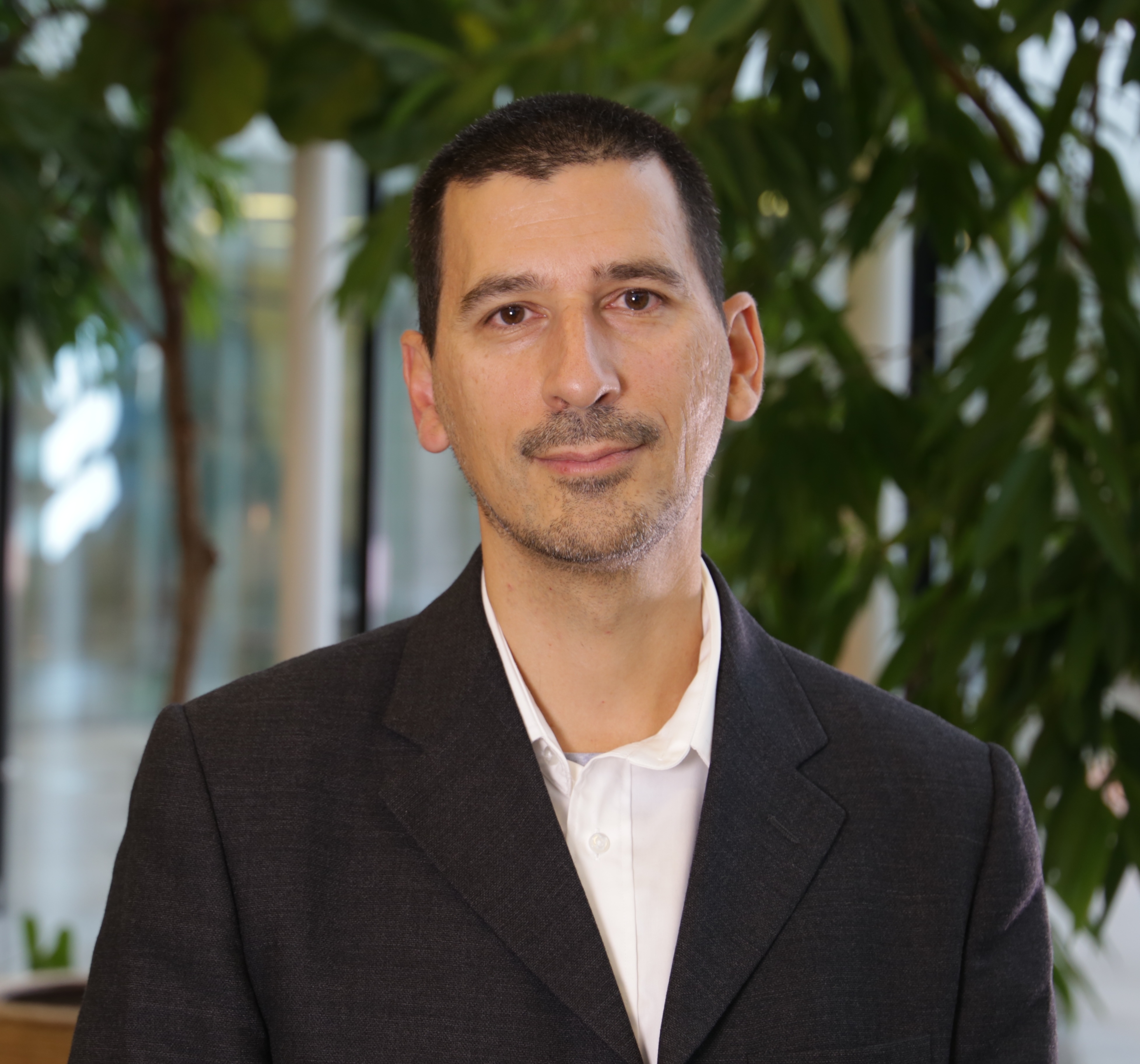 Ignacio Más is Ericsson Fellow in Autonomous Programmable Networks, where he oversees the overall evolution and technical direction of Ericssons vision in his topic over research, development and customer interactions. Previously he has acted as Senior Expert and Head of Technology Strategy in OSS in Ericsson Business Unit Digital Systems, as well as in Ericsson Group Function Technology holding the tittle of Senior Expert in Programmable Network Architecture. Ignacio has represented Ericsson in the Linux Foundation Networking board of directors as well as in TMF collaboration subcommittee. He obtained a PhD in Telecommunications from the Royal Institute of Technology, (KTH, Sweden) and a Master of Science from both KTH and the Telecommunications Engineering school of 'Universidad Politécnica de Madrid'. Ignacio joined Ericsson in 2005 and started working in IETF standardization, IPTV and messaging architectures and media related activities inside Ericsson Research. When he joined Group Function Technology he became the CTO office expert in media, SDN and cloud networking related issues, where he lead the company in the evolution to a network architecture focused on flexibility and programmability with emphasis on software define networking and network functions virtualization and cloud native technical paradigm implications.
TECHNICAL CO-SPONSORS

PATRONS




ORGANISERS

IN COLLABORATION WITH